


Cattle Yard Design Mistakes That Cause Injuries And How to Avoid Them
A cattle yard doesn't look dangerous when it's empty. It's just steel, gates, and a bit of dust. But put a mob of cattle through it on a hot afternoon and every weak point in the layout suddenly matters. Most injuries in the yard, to cattle and to the people working them, don't come from bad luck. They come from a design decision made years ago that never got fixed.
If you've ever had cattle baulk at the same spot every single time, or found yourself climbing a rail to get out of the way, that's not a cattle problem. That's a yard design problem.
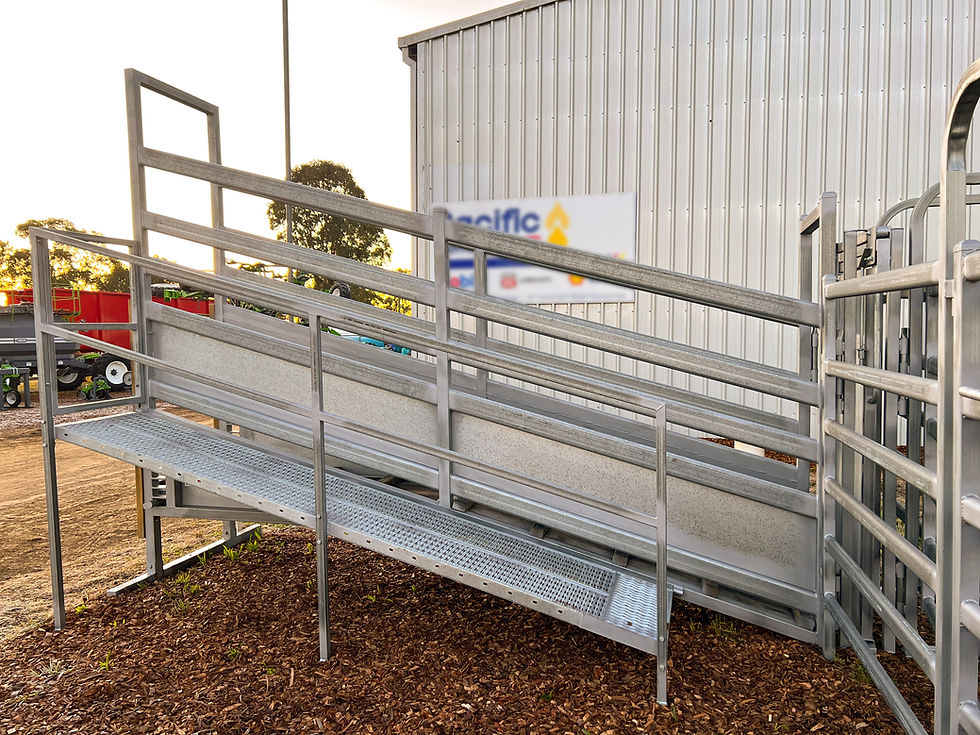
Why Design Matters More Than People Think
Producers often spend money on a better crush or a stronger headbail, but keep working through a layout that was never built with flow in mind. A weak crush can be replaced in an afternoon. A poorly designed yard or race is a much bigger job to fix, which is exactly why so many producers keep working around bad layouts instead of correcting them.
Good cattle yard design isn't about looking impressive. It's about moving stock the way cattle naturally want to move, with fewer stops, fewer surprises, and fewer chances for a beast to turn back into a handler.
Sharp Corners and Dead Ends
Cattle don't like square corners. When a yard has tight right angles, animals bunch up, hesitate, or try to turn back the way they came. That hesitation is when kicks, crush injuries, and gate mishaps tend to happen. Curved, funnel-shaped designs work with the animal's instinct to keep moving forward instead of against it.
Poor Sightlines
If cattle can see movement, machinery, or people outside the race, they'll stop to look. A stalled leader stalls the whole line behind it. Yards that don't account for this force handlers to get in close and push cattle along by hand, which is one of the more dangerous jobs in the whole operation.
No Escape Path for the Handler
This one gets overlooked constantly. A good layout gives the person on the ground somewhere to step out of the way fast. If your race, forcing yard, or crush area doesn't have a clear exit point for the handler, you're relying on the cattle's mood to keep you safe.
Mixing Fixed Equipment with the Wrong Layout
A high-quality crush or headbail won't perform properly if the race feeding into it is too wide, too straight, or badly angled. Cattle handling equipment only works as well as the yard components it's connected to. A great crush at the end of a bad race is still a bad race.
Undersized Yards for the Herd
A yard built for fifty head doesn't get safer just because you're only running twenty through it that day, or more dangerous because you're pushing eighty. Undersized yards create crowding, crowding creates panic, and panic is where most injuries start.
How to Avoid These Mistakes
The fix isn't complicated, but it does take an honest look at your current setup. Walk your yards on a quiet day and watch where cattle hesitate, bunch up, or try to double back. Those pressure points are usually where the design is working against the animal instead of with it
From there, it comes down to a few basics:
Curved forcing yards and races instead of sharp corners
Sheeted panels or solid rails where cattle need to be shielded from outside distractions
Clear escape points for handlers at every stage of the race
Cattle yard components sized correctly for your actual herd numbers, not just the property average
Equipment and layout designed together, not bolted on separately
Built Right the First Time
Cattle yard design isn't something you want to redo every few years. It's a long-term investment in how safely and efficiently your property runs, day in and day out. RPM works with producers across Australia to design yards, from small setups to full forcing yard systems, that are built around how cattle actually move, not just how a yard looks on paper.
If your current layout is causing more grief than it should, our team can let you know what's working, what isn't, and what a properly designed yard could look like on your property.
Get in touch with RPM to talk about your next yard design.


Comments